
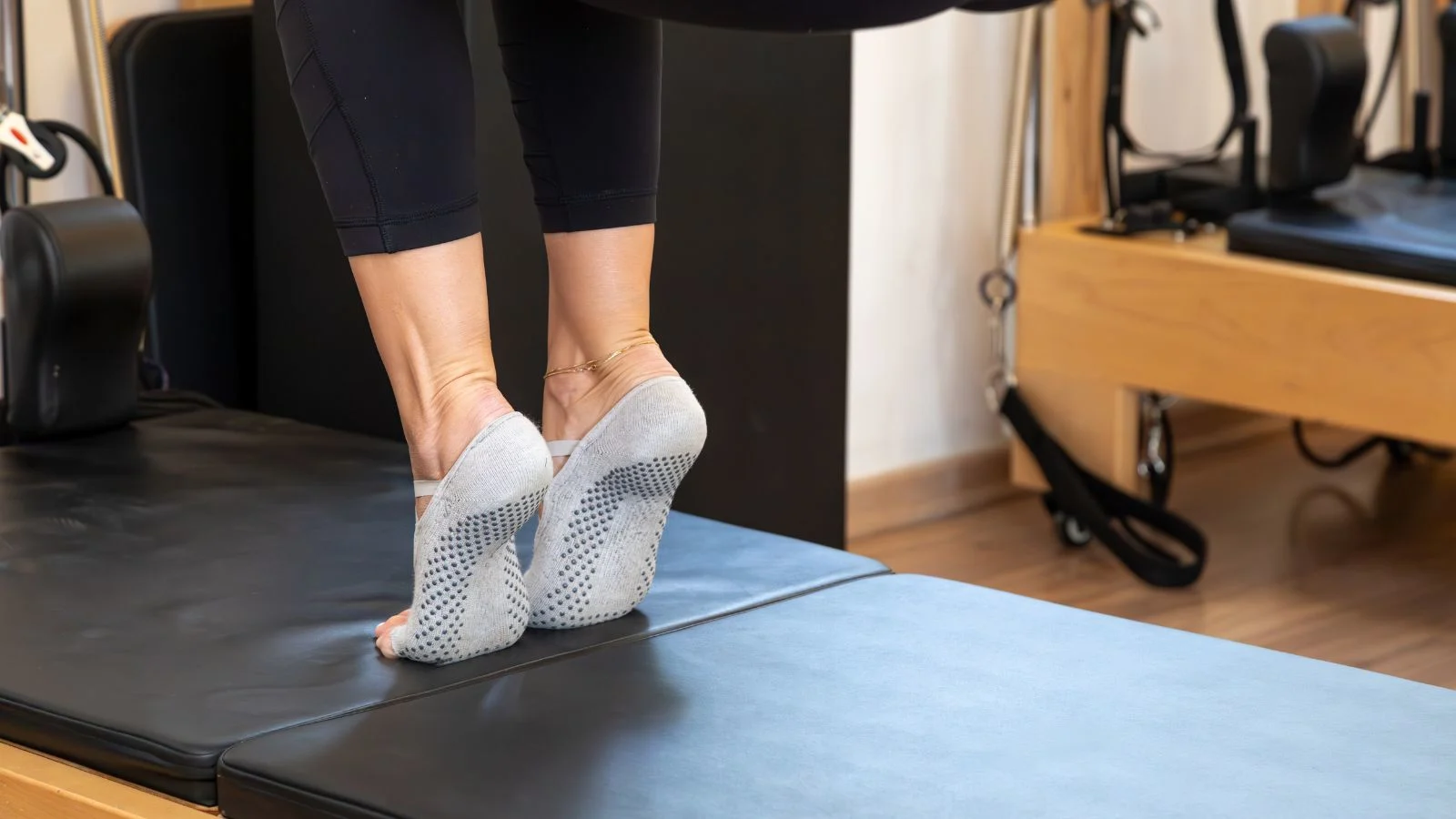
When you step onto a Pilates reformer or roll out your mat, the connection between your feet and the equipment matters more than you might think. Pilates is built on precision, control, and alignment, and what you wear on your feet can either support or sabotage those principles. The two most common preferences among practitioners are the barefoot feel and secure grip. Understanding the difference will help you choose the right Pilates socks for your unique practice.
The Case for Barefoot Feel
Many Pilates purists prefer working out barefoot. There’s a legitimate reason: going sockless gives you direct sensory feedback from the floor or reformer. Your toes can spread naturally, you can feel subtle shifts in weight, and your foot muscles engage more actively. This input helps refine alignment and teaches your feet to become stronger, more mobile structures.
However, barefoot practice isn’t always practical for hygiene concerns—shared equipment in studios can harbor bacteria and fungi. Additionally, bare feet can become slippery once sweat builds up, compromising stability during lunges, planks, or standing work on a slippery mat.
Why Secure Grip Matters
Enter grip socks, also called Pilates socks or barre socks. These are designed with a secure grip through silicone or rubber treads on the sole. The grip provides traction that mimics the friction of bare skin—often even better—while adding a hygienic barrier between you and the equipment.
For movements like footwork on the reformer, side-lying leg series, or standing balance poses, grip socks prevent unwanted sliding. This allows you to push through your heels and feet without worrying about your foot shooting out from under you. The result is greater confidence, which translates to better form and deeper range of motion.
How to Choose the Right Pilates Socks for Your Practice
When deciding between a barefoot feel and a secure grip, you don’t necessarily have to choose one for all situations. Many practitioners use both depending on the workout.
Consider these factors:
- Studio Requirements:Some studios require grip socks for hygiene and liability reasons. If that’s the case, you’ll want a pair that still offers a relatively “barefoot” sensation.
- Type of Equipment:Reformer and chair work often benefit from full-foot grip coverage, while mat Pilates may allow more freedom. Look for socks with grip that extends to the heel and forefoot for reformers.
- Material and Fit:For a barefoot-like feel, choose thin, low-profile socks made from breathable cotton or bamboo blends. Avoid thick, cushioned socks if you want maximum sensory feedback.
- Grip Pattern:Larger, spaced-out silicone dots provide a moderate grip that still lets the foot articulate. Full-coverage grip patterns offer maximum stability but can slightly mute tactile feedback.
Combining Both Worlds
The best Pilates socks today strike a balance. Brands now design socks with targeted grip zones—concentrating silicone on the ball of the foot and heel while leaving the arch free. This gives you the secure grip where you need it most, while preserving a barefoot feel through the midfoot, allowing your foot to flex, point, and articulate naturally.
If you’re new to Pilates, starting with a high-quality grip sock is a safe bet. As your foot strength and body awareness improve, you might experiment with going barefoot for certain exercises or switching to minimalist grip socks that offer the best of both worlds.
Ultimately, the right Pilates socks are the ones that help you move with stability, comfort, and confidence. Whether you prioritize the raw connection of barefoot feel or the dependable traction of a secure grip, your feet will thank you—and so will your practice.